Taboga Island · History
History of Taboga Island
For Panamanians, the name Taboga is closely linked to art, music and literature. The island's coastal perimeter runs about eight miles around a small colonial town that has seen more than four centuries of history pass through its narrow streets: Spanish colonizers, English pirates, Chilean and Peruvian warships, and even a French painter who would go on to become one of the great names of post-impressionism.
Its name is said to come from an indigenous word meaning "abundant fish," and today the island is also known as the "Island of Flowers" for the vegetation covering its hills. This page brings together what local sources document about Taboga's colonial founding, the pirate and warship attacks the town endured, Paul Gauguin's stay in the 19th century, and the episodes of the 20th century that followed.
Founding and the colonial era
The Spanish had already settled on the isthmus by 1510, founding Santa María la Antigua del Darién, from where Vasco Núñez de Balboa set out to discover the Pacific Ocean. Figures such as Pedro Arias de Ávila (Pedrarias), Pascual de Andagoya, Francisco Pizarro, Diego de Almagro, Gaspar de Espinosa and Hernando de Luque himself passed through that same settlement. Before the town of Taboga existed, Gonzalo de Badajoz had already set foot on its shores in 1515, fleeing Cacique París after being defeated at Parita.
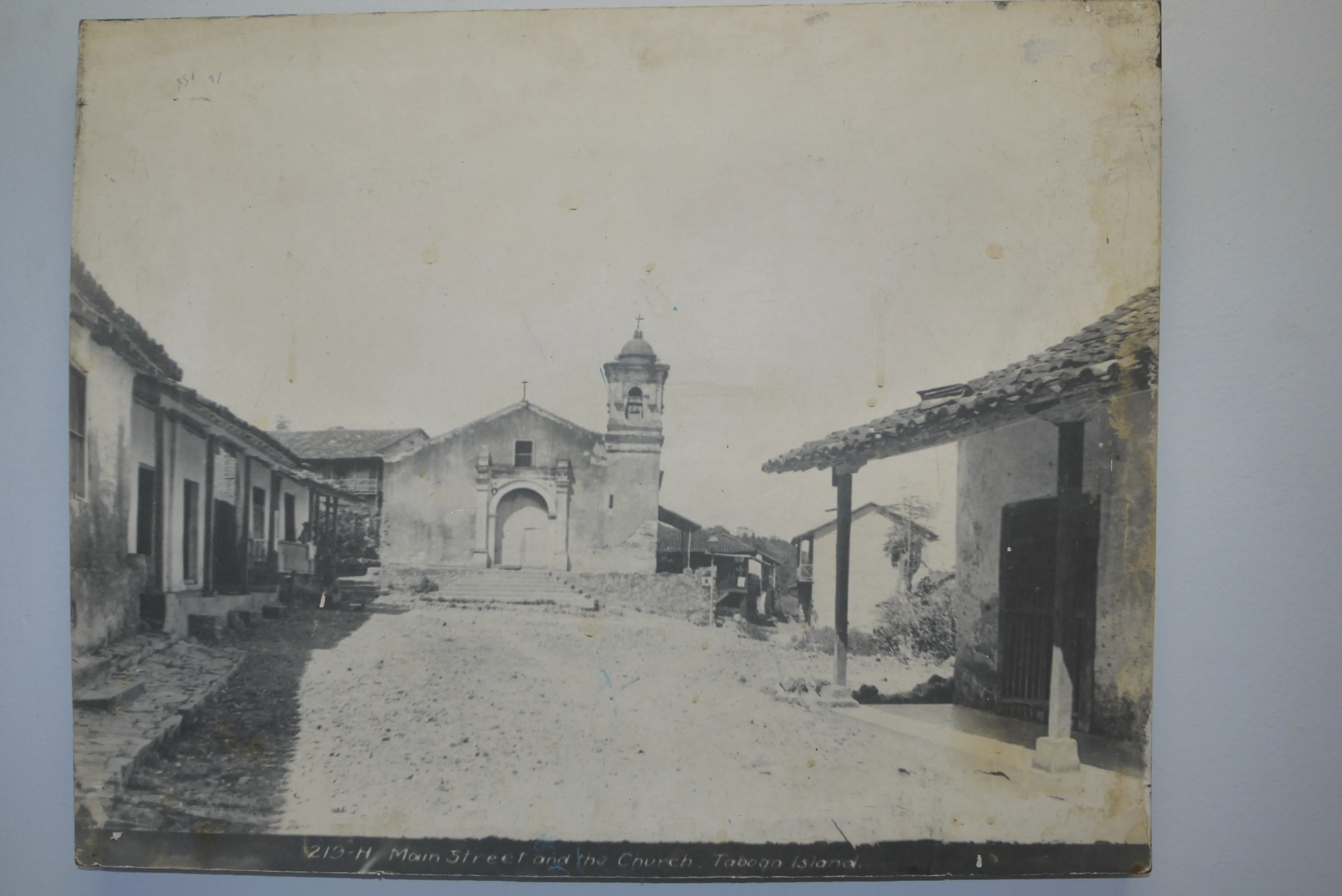
Pedrarias arrived on the island in 1519 looking to found a coastal settlement, a mission he accomplished that same year with what is known today as Panamá la Vieja — a city that would later be sacked and burned by the pirate Henry Morgan in 1671. Taboga then became a base of operations for the conquest of Peru: the expedition of Francisco Pizarro and Diego de Almagro set out from the island, helped by Hernando de Luque, vicar of the Cathedral of Panama. In the small church that preceded the current one — which, according to island tradition, was the second oldest church in the hemisphere — both conquistadors took the host before setting sail. The town of San Pedro de Taboga was founded that same year, 1524, by Canon Hernando de Luque, who named it after the island's patron saint; years later Almagro would die at Pizarro's hands, and Pizarro himself would be killed by Almagro's followers in his own house in Lima. Luque stayed on the island and devoted himself to farming.
Pirates and raids
The pirate Morgan brought his buccaneers and galleons to make rest stops on the island during their voyages — though in most cases the men simply drank all the wine on the island. After sacking Panama City, Morgan sent troops to Taboga in 1671 with orders to "sack and burn everything." Other pirates used the island too: Hawkins is recorded settling on Taboga in 1686, and the English privateer William Dampier anchored his ship off its coast in 1685. It's also said that bishops Fray Bartolomé de las Casas and Fray Tomás de Berlanga once spent a night on the island during that same colonial period.
The attacks didn't end with the colonial era. In 1819, the Chilean warship Rosa de los Andes attacked Taboga, burning the town and destroying the church founded by Canon Luque. In 1870, the Peruvian frigate Pichincha tried to abduct a group of Taboga women who had been invited aboard for a party; that same year, English sailors started a brawl in which the town's mayor, Manuel A. Fuentes, was killed.
Gauguin and the 19th century
In the 18th century, Taboga lived off pearl fishing alongside its neighbor Taboguilla. The island's wealthiest period, though, came with the California gold rush: an American company established a naval station there in 1847, alongside British (The Pacific Steamship Navigation Co.) and Australian steamship companies. Between 1849 and 1850, Taboga functioned as the port of Panama, with a hundred-meter shipyard at El Morro that included a warehouse, dock, offices, workshops, housing, a hospital and a cemetery — traces of those buildings still remain. Thanks to that boom, the island's population grew from 1,568 residents in 1870 to 3,130 in 1896, with warehouses supplying ships, clothing shops, carpentry workshops, bakeries, billiard halls, party halls, boarding houses and as many as three doctors.
From 1885 onward, Taboga began to benefit from the construction of the French canal; that same year, a medical center with capacity for 25 patients was built on a hill with a view of the sea. One of its most notable patients was the French post-impressionist painter Paul Gauguin, who spent several weeks there recovering from malaria in 1887 before continuing his travels to the islands of the South Pacific, where he went on to paint many of his best-known works.
The 20th century
In 1857, an incident known as the "Watermelon Slice Riot" led the United States to demand Taboga Island as indemnity for alleged damages suffered by American citizens. Decades later, in 1920, the United States again sought to occupy the island, an attempt that was rejected by then-president Ernesto T. Lefevre. During the Second World War, the island hosted a US Army base atop Cerro de la Cruz, which brought a real economic boost to Taboga given the number of soldiers stationed there.
Today, the church of San Pedro still holds ancient carvings and decorations inside, and local accounts say the walls hold the ashes of pirates. The island also keeps its old cemetery, with headstones spanning generations — both still standing next to the town, as the most visible witnesses to everything told on this page.
Island legends
Alongside its documented history, Taboga keeps its own oral tradition: five legends passed down from generation to generation in the town.