Taboga Island · Activities
Things to do in Taboga Island
Beach, colonial town, hiking trails into a protected reserve, and even a local sea-turtle conservation effort — all less than an hour by ferry from the city.
For the average visitor, Taboga is a beach-and-sun day that starts at 8:00 am and ends back on the mainland by 4:00 pm. What isn't always obvious is that the island offers more than that: its streets and its town, largely unchanged over the years, contrast with the high-rises and pace of Panama City across the bay — and behind the town there are trails into a protected reserve, plus a neighborhood project that looks after the sea-turtle nests that come ashore on the island.
This page groups those activities by category: the island's usual beaches, the El Morro sandbar (tombolo), the hiking trail into the island's hills, the sea-turtle conservation work, whale season, and the town's festive dates.
Beaches: La Restinga and Playa Honda
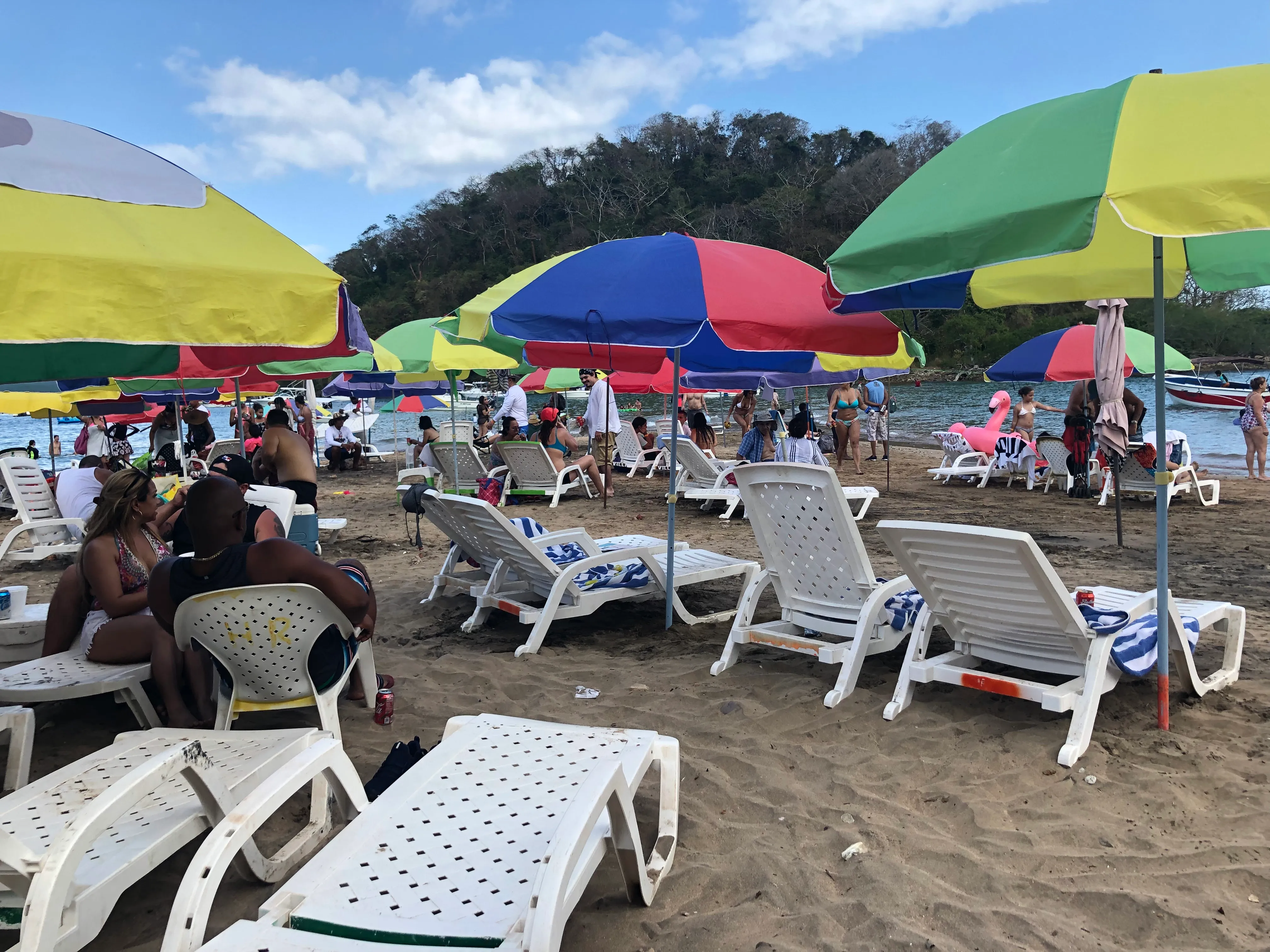
La Restinga is the beach formed on the sandbar that connects the town to the El Morro islet; its name comes from the Spanish "restinga" — per the Royal Spanish Academy, a shallow sand spit under the sea. It's the beach closest to the pier and the town center.
Playa Honda is the island's other main beach, a little further past the town, and it's home to several of Taboga's seafood restaurants (see our where to eat guide). At both beaches you can rent umbrellas and chairs right on the sand.
El Morro and the tombolo
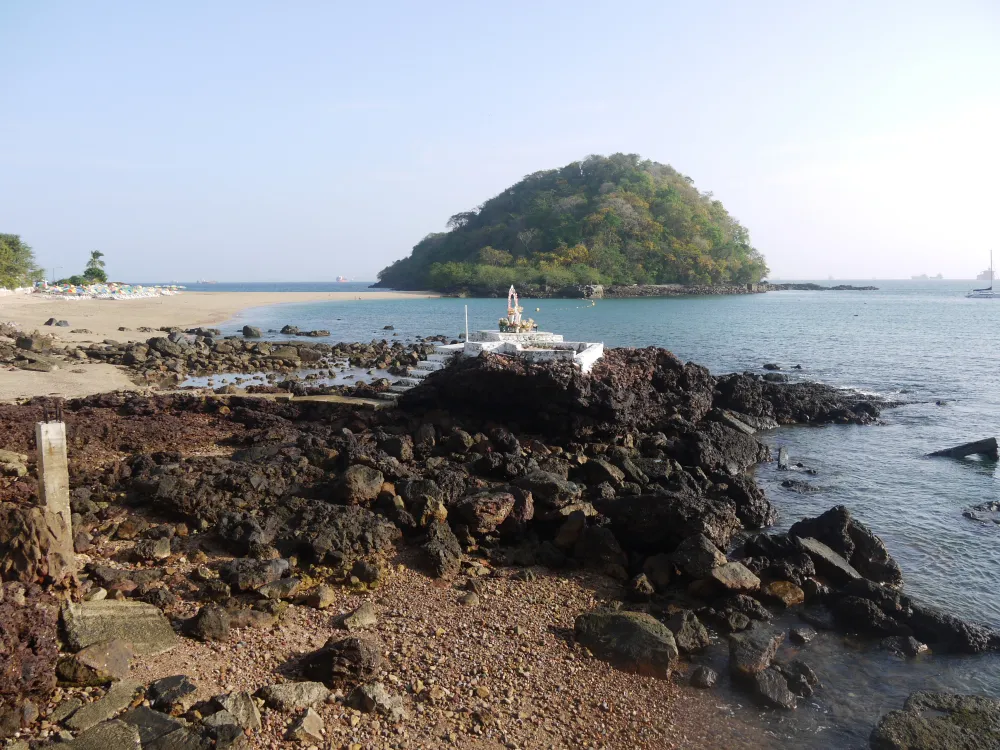
El Morro is the islet joined to Taboga by that same sandbar, La Restinga. Both names match real geographic features: "morro", per the Royal Spanish Academy, refers to a rounded or steep crag, or a low hill — exactly the silhouette you see from town and from the ferry as it approaches the island.
Hiking: Cerro de la Cruz and El Vigía
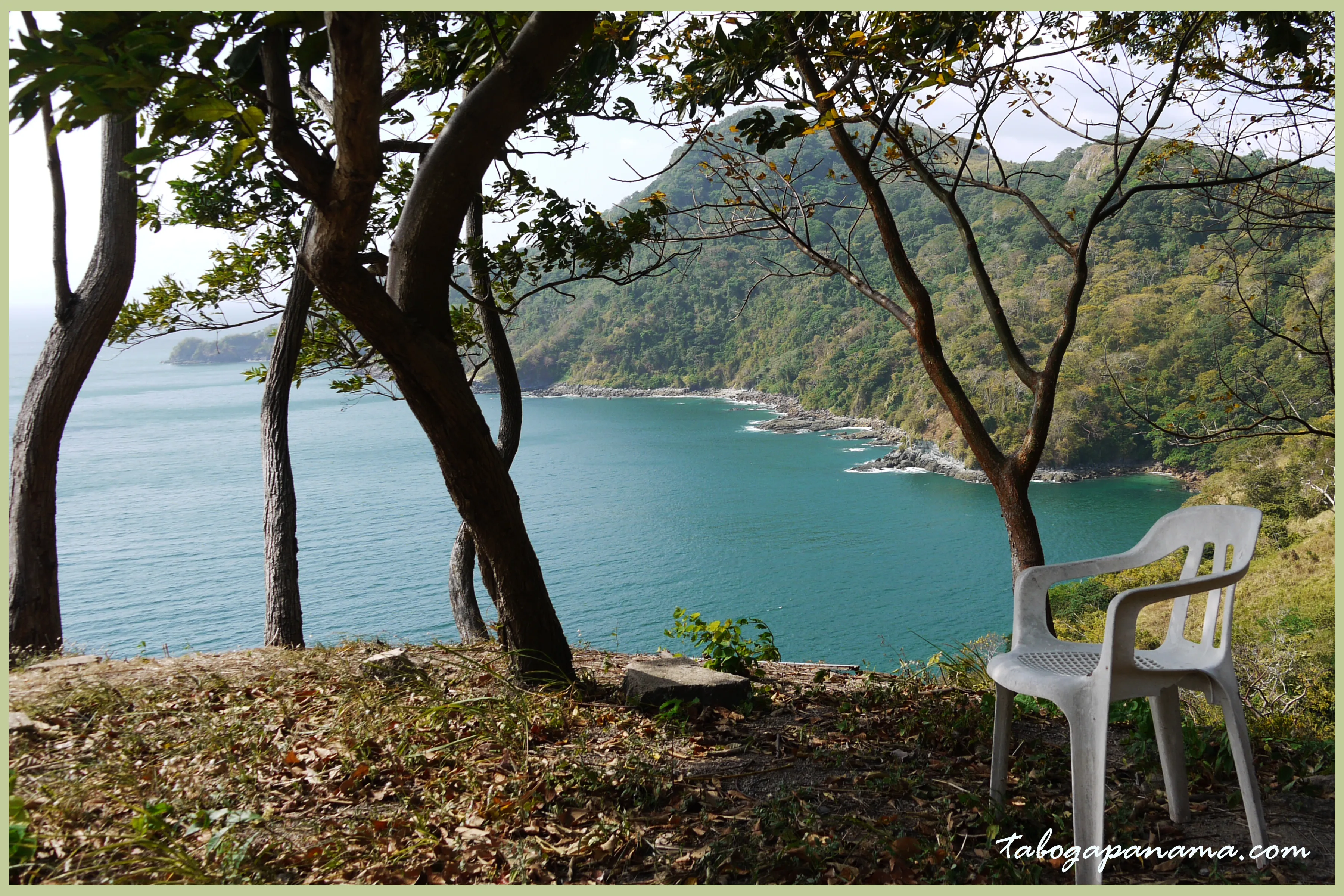
Taboga sits in an archipelago where roughly 80% of the land is a protected wildlife and flora reserve. Its two best-known hills, El Vigía and Cerro de la Cruz, have moderately-accessible trails; the island also has a less accessible beach, El Jobo, with good potential for anyone looking to explore beyond the main beaches.
A perimeter path starts as a paved coastal road and turns into a dirt trail as the town's houses thin out; at some point the vegetation makes it impassable, and that's where you turn back. Trail markers are scarce, so if you're not used to this kind of hiking, you can ask for a bilingual guide on the island.
For the hike, it helps to wear long pants, boots, socks, a cap, sunglasses, and a watch or charged phone, plus a backpack with water, snacks, a knife, and a spare battery — the climate on the island is hot and humid, so the main precaution is avoiding dehydration and not setting out at mid-morning or midday. The trail doesn't pose much wildlife risk, but it's worth being prepared.
Sea turtles
In September 2022, a sea turtle came ashore to lay eggs on one of the island's beaches. Thanks to a group of Tabogan residents — including several of the beach-umbrella vendors, along with Dimas Bustamante and Samid Botello — the eggs were moved to a safe spot so they could hatch. That group, which goes by #tortugastaboga, is a non-profit working to run a turtle-egg nursery; as of 2022 they reported having helped more than 1,000 hatchlings return safely to the sea over four years of work. You can follow their work on Instagram at @tortugastaboga.
Whale watching
Between July and October, humpback whales typically pass through Panama's Pacific waters on their migration route. If your visit falls in those months, it's worth asking around the island or the city about whale-watching tours running that season.
Festivities
Taboga's town was founded in 1524 as San Pedro de Taboga, honoring the island's patron saint, and that patron feast of San Pedro is celebrated every year on June 29. The other major festive date is Carnival, which in Panama is celebrated over the four days before Ash Wednesday and, as in the rest of the country, is also observed on the island.