Taboga's 2010 Community Projects
January 20, 2010
Between January and August 2010, tabogapanama.com published a series of short posts with ideas and proposals for the island: everything from cleanups and infrastructure fixes to tourism-promotion initiatives. These are the author’s own working notes — some carried out at the time, others that stayed only as proposals.
They are grouped here, in a single article, from the original texts — published separately on the historical blog between January 19 and August 19, 2010 — with format cleanup only, faithful to each one’s content.
Trash collection on the island
Originally published January 20, 2010.
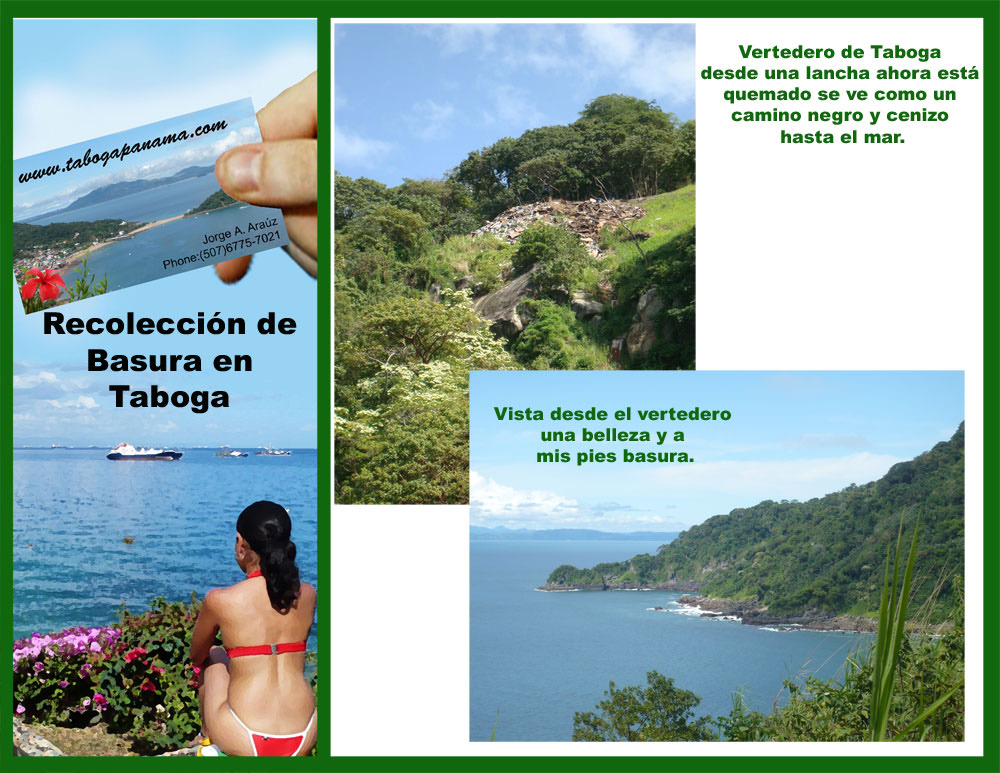
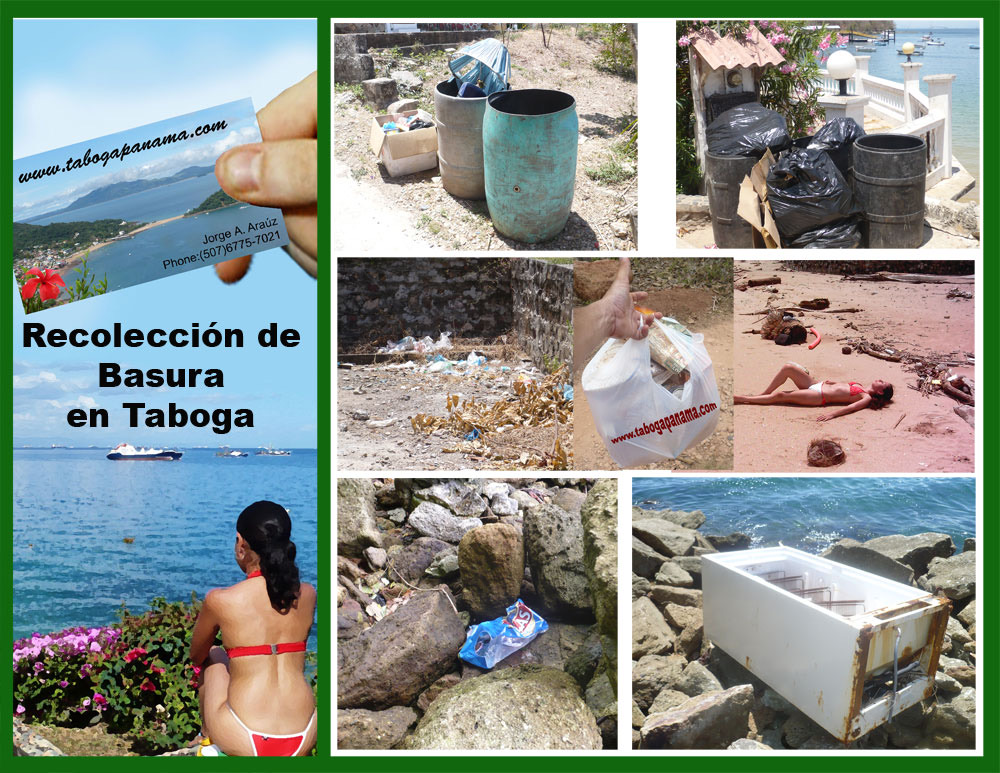
This is a project I’ve had in mind for a while, and one many people relate to. I now need to talk with Taboga’s mayor’s office; hopefully they’ll be open to new ideas and to young people getting involved. My idea was to use the page to organize a trash collection from El Morro, past La Restinga, continuing through Barlovento and Playa Honda, going around the island’s perimeter to a bit past the Anam building (I’ve walked that path several times, and the trash trail seems to end around there; further up the Anam road, toward the dump, you can still find some trash, but on a smaller scale).
Fixing the cemetery
Originally published January 20, 2010.
I don’t know if you’ve seen it; I hope it’s better than when we went during the 2009 election season, when it was so dirty — overgrown, with coffins visible, and a small dump behind it. This is also something Taboga’s mayor’s office should do: have someone clean it at least once a month. You wouldn’t believe how many foreigners visit the cemetery thinking they might have an ancestor buried there, and it’s sad to arrive and find everything so run down. If the town itself won’t take care of it, at least do it with tourism in mind.
Rebuilding and adding beach shelters facing Playa Honda
Originally published January 20, 2010.
Well, this is something the mayor’s office needs to handle: those shelters are an embarrassment. My idea is to fix them up and add the same number again, rerouting the sewage from the school and the houses further up. This is a fairly large investment, since the pipes drain straight onto the beach; a proper study is needed, but it’s quite feasible. For now, here are a few pictures of how they look and how they could look.
Beach umbrellas on the island
Originally published January 20, 2010.
This project is directly for tabogapanama.com: the idea is to take 100 old beach umbrellas off the hands of the people who rent them out on the island. They’d give me 100 of their old umbrellas — which I’d otherwise throw away or donate to some organization that could put them to good use — and in exchange I’d give them 100 new ones printed with the page’s name and some advertising, so that when a foreign or local visitor arrives on the island, they’d tell the umbrella owner, “I saw your ad on the tabogapanama page,” and if they came referred by it, the owner wouldn’t charge 5 but 4 balboas, or even 3.50 — which is roughly what they charge for an umbrella anyway. It would be great advertising both ways, and the Panamanian doing domestic tourism feels like they got a deal, and that makes them happy.
I’m flagging this one because, while it’s a good idea, umbrellas are expensive: around 40 balboas each, so 100 umbrellas would run 4,000 balboas, and with printing it could land somewhere between 4,500 and 5,000 balboas. One option would be for a good samaritan to donate them — that’s the funny part — but another option is to split the advertising, for example by pitching the idea to Atlas and having them provide umbrellas with their own logo plus, somewhere on it, the page’s name. I urgently need a PR person, and a good-looking one at that, so that whatever they’re selling gets bought.
Tabogapanama.com sweaters
Originally published January 20, 2010.
Right now I have a dilemma: if the money for the t-shirts is coming out of my own pocket, it needs to be as simple as possible, because my funds have to stretch over a long period.
I was thinking of doing a first run of one hundred (100) t-shirts: a logo on the front at chest height, and artwork plus the page’s name on the back. A single color, dark green sweater with white lettering. 100 sweaters: 50 medium, 25 large, 25 small. That was my original idea.
Now I’m working on getting a company to sponsor the sweaters, so I thought about adding more colors, though I still lean toward keeping the lettering a single simple color. Two t-shirt colors, blue and dark green, with white lettering. At least 200: 30 extra-small (15 blue, 15 green), 50 small (25 blue, 25 green), 50 medium (25 blue, 25 green), 40 large (25 blue, 25 green), 30 extra-large (15 blue, 15 green).
This isn’t the final product, but there isn’t much more to tweak; it could be quoted as-is so we can start getting a price to pass along to the company.
Informational signs
Originally published January 20, 2010.
The scarce information about the services locals offer makes it harder both for tourists to find those services and for locals to get the payment they expect. One concrete example is the work of a woman who offers a bathroom and a place to change for tourists who just come for the day. My problem is that I don’t have capital — otherwise I’d do it for free; I do the artwork myself, which is already work, but I need someone to cover the rest of what making these actually takes.
I’d also like to make a few signs to place in different spots on the island, since it’s been offered to me: Popeye’s restaurant, the fruit stand at the entrance, Mr. Eddie’s crafts stand, Cerrito Tropical. In exchange for advertising on the page — it benefits both sides.
Advertising flyer
Originally published January 20, 2010.
I already have the general idea; what’s missing is sponsorship. The plan is to place it in different spots around the city, like hotels, restaurants, and the airport, showing the different places and things to do besides sunbathing and drinking beer on the island. I still don’t have sponsorship for it, but I put together some general ideas of how it could look. I was thinking of swapping the Google Earth-style map for a pirate-style one, similar to the one Ms. Cintia Mulder has on her website.
Saving El Vigía and turning it into a tourist stop
Originally published January 20, 2010.
El Vigía is one of the highest points on the island, if not the highest. You can get there a few ways: up the hill through the Tres Cruces area, or by road. From the top there’s a phenomenal view of the island and of Panama City, but lately I’ve noticed it deteriorating and little interest from the authorities in fixing it up. Personally I don’t have the capital for that; if I ever do, things will be different, but for now all I can do is spread the word and offer good intentions.
It could be used as a place to bring people to see the island’s history — fill it with photos and information, a little history museum of sorts. El Vigía was a canal-defense point for the Americans during World War II: it’s a two-story armored bunker with structures added on top that now serve as a lookout. One of the floors was used like a jail or storage, and the upper one is where they placed the machine guns protecting the canal’s entrance; the walls of the structure are extremely thick, about 50 cm, given the job they had to do.
Taboga art contest
Originally published January 20, 2010.
Talk to Professor Ortiz and Professor Dan Lau to see how feasible it would be to bring a group of university students to the island and, camera in hand, have them take photos and produce art — pointillism, oil, whatever — of Taboga, to exhibit at the university. The pieces would then be scanned and posted, all of them, without exception, on the page.
Model photos on the island
Originally published January 20, 2010.
I was recently contacted by a photographer named José González, who showed me his work — quite impressive: photos of models from all over Latin America. He’s now working for a magazine, I believe www.latinmodel.tv (site now offline), and asked if I could find a place on the island for them to stay. I offered to put them up at the house, and in exchange he agreed to donate a few photos to me and credit www.tabogapanama.com in the magazine. The magazine covers the stay, but to me the PR is worth more than the roughly 100 dollars a night they might otherwise offer. On top of that, there are three models in swimsuits at the house; the young man needs two rooms — one for the models, who are three, and another for him and his crew, four people. No problem, I just need help from my own team.
Recreating coins in copper, aluminum or some other metal for sale, and a Megalodon tooth
Originally published January 20, 2010.
I bought a Pirates of the Caribbean coin in the US and want to make a mold to produce Taboga souvenirs: the coin on the front, and on the back something like “I found this in Taboga” or a similar island reference, along with the page’s name. This would be done with David or with Mr. Saval.
The same approach could work with plastic, resin, or some other durable material — worth asking David — for a Megalodon tooth, a 15-to-17-cm-tall shark tooth, with an image of a human, a great white shark, and a Megalodon, or something else referencing Taboga, to sell on the island with its own display base, etc.
Taboga videos
Originally published January 20, 2010.
This original post carried no text at all — just two videos of the island embedded from YouTube, with no additional commentary from the author.
A hike looking for a geocache on the island, and trash collection on Isla de las Flores
Originally published January 27, 2010.
Planned with my friends, I decided to go to Taboga to do an impromptu trash collection. Fourteen of us took part, but when we got to the beach we realized the tide was high, so we decided to hike up to “La Cruz del Sinaí,” one of the island’s high points, looking for a “cache” (a treasure hidden up on the hill that you locate with GPS). It was pretty well hidden, but we found it, checked what was inside, left a few items, and I left a card in there too; then we put it back where it was. After several photos we started heading down, arriving around one in the afternoon. After lunch we all regrouped at El Morro, where, with the tide now low, we started picking up trash while plenty of beachgoers watched; we worked for about an hour and collected 25 large bags. Several tourists joined in and helped. Afterward we went for a swim and caught what little sun was left, then headed back to the house tired but happy with the work done. The next day was beach time for many of us; some of us slept in, others went over to the Aspinwall area to do some diving — a really pleasant beach weekend.
I hope these activities can be repeated on the island; it benefits everyone, and it helps people realize that our planet is asking for help, and it’s time to give it before it’s too late.
Tabogapanama.com exhibit
Originally published June 30, 2010.
With an eye toward promoting tourism on Taboga, I’m putting together a small photo exhibit of the island at a restaurant-bar in Panama City; my idea is to rotate the images through several restaurants in the city and in Casco Antiguo. The images are a selection of 35 of the best photos I have of the island, though for now I’ll print 20 for the first showing, this coming July 2010.
Panamapirates.com
Originally published August 19, 2010.
Beach and party entertainment: a sword-fighting routine (I thought about guns and blood, but there are usually kids around and I figured that’d be too much, so it can just be a gunshot sound and the person dropping to the ground).
Tourist guides in Taboga. The crowd’s attention is drawn with a well-rehearsed sword fight, around 5 minutes long, between the trained fighters (David) and practice with anyone who wants to join in, using blunt swords to keep accidents to a minimum. Afterward, once the “fight” ends or as a greeting, both sides let people know, in English and Spanish, that we’re working for the good of the island as tourist guides. Talk to the mayor about getting young people involved in these activities, English classes, talks on how to work with tourists, aimed at young Tabogans. Sponsorship with Ron Abuelo: go to their offices dressed in costume with the plan under my arm, ideally with one or two girls dressed as pirates too (have the website ready); possible names: panamapirates.com (logo, ideas, business cards, etc.). Varela Panamá — Address: Urbanización Industrial El Crisol, Calle La Cantera, Vía Tocumen; phone 217-3777, fax 217-3666.
Tours offered. Starts wherever we set up, using a pirate map shaped like the town with different spots marked with a cross — nice and piratey (Playa Honda, ruins of Hernando de Luque’s villa, the church, Rogelio Sinán, a treasure found at the clinic, Paul Gauguin, my house full of photos, the house’s park, public hammocks, and the Aspinwall).
- Town tour (1 hour): part of the town, from wherever we’re meeting up to the cross; water is provided and people are warned about the steep terrain.
- Tour to La Cruz (1 hour 30 min): part of the town up to the climb; explains the high humidity and possible issues with the climb.
- Bar tour (2 hours): bar to bar, round trip, one beer at each stop, everyone shouting “yohooo!” like good drunks.
- Tour around the island by boat (1 hour): boat rental is 40 dollars for a roughly 40-minute trip around; covers the San Pedro burial mound and the different beaches.
The first four tours include a visit to the house exhibit, with as many images as I can gather, set up in the covered area of the house, with a little dramatization of someone breaking in to rob or loot the place (clarifying that it’s the house we rented). If sponsorship comes through, guests get a drink of Abuelo or Cortez rum, on the house, along with the exhibit.
How to charge. As always, this is the main problem: how do I charge for this service? I’m open to any suggestions from readers. My idea was a per-head price for the different tours (kids always free), with a pirate-bandana-style wristband from tabogapanama.com and a pirate nickname for each person: town tour, 7 balboas per adult; tour to the cross, 7 balboas per head; tour to Tres Cruces and El Vigía, 8 balboas per head; bar tour, 10 balboas per head (a round of beers at three bars); tour around the island (max 7 people), 10 dollars per head.
On the back of the costumes, something like “I will bring u a cold beer for 1 buck,” aimed at international tourists (and any local who asks). Make a sweater that says tabogapanama.com, the slogan in the middle, and the sponsor up front — an idea to put the locals to work; you’d make 30 cents per beer, plus the satisfaction of a happy tourist.
Costume. Important to build the costume before starting to work; the most recognizable pirate today is Captain Jack Sparrow, so my plan is to build that costume before pitching any of this to the town or the mayor (“pics for tips”: if someone wants a photo, that’s still work, hence the tip).
Tabogapanama.com website
Originally published January 19, 2010.
I have the domain and name paid for through August, which gives me a couple of months to save up for the next payment.
The website has several sections:
- Home. Where there will be important news, fun facts, recent activities, etc. Ad banners, if any, will go on the sides of the various sections.
- History. A summary of the island’s history (I already have all that).
- Photos. Photos of places on the island, like on Facebook; about 100, the most beautiful ones I have.
- Tourists. Important section: on the weekends we go out, people carry cards, badges, and t-shirts from the page — not just anyone, of course; it has to be managed by the page’s staff, meaning me, since it’s possible someone puts on a sweater and goes and causes trouble under the page’s name. Talk to tourists in whatever language, Spanish or English, and offer them a photo of their stay on the island — people are in swimsuits, so nothing lewd is an option (the photo is shown to the person right after it’s taken) to post on the page, so that when they get home they can look at it and show their families. Locals can also be photographed, as long as they’re sober; avoid drunks.
- Places of interest. Playa La Restinga; El Morro (English Cemetery, monolith); Playa Honda; Playa Barlovento, past the condominium; the island’s church; Rogelio Sinán’s house; Paul Gauguin’s house; Las Tres Cruces; El Vigía; La Cruz; wildlife refuge; pelican nesting area; the San Pedro burial mound; the radar at the top of the mountain; the Aspinwall; the town itself with its narrow streets; Comité Porras.
- Supply spots. Snack stands (sausage, skewers, beer); Tienda El Norte; souvenirs with the Peruvian/Bolivian vendor; a place to change and shower; restaurants; hotels; bathrooms.
- Thesis project. A section dedicated to my thesis, with all the chapters as they get written and revised.
- Contacts. Photos of the people involved and collaborators who are allowed to take photos, so we’re covered in case someone tries to misuse things. For now: Jorge Arauz, David Acero, Yuli Hurtado, and Zugey Nieto; I’m recruiting the Taboga division and thinking of three more people: Elías (tourist guide — not sure he speaks English), Ana Lorena Vergara (tourist guide), and Fernando Delgado (tourist guide). I know there are a lot more people I could recruit to work for the island’s benefit, unpaid, of course. I wanted to see about getting Miguel Castillero involved, but the only way is by showing this is being run in an organized way, so he’s not afraid to invest and put Hidropower’s name on the project.
Legal paperwork
Originally published January 19, 2010.
Well, I’ll start with the name (even though I probably shouldn’t, since I saw the idea on a Dilbert bit online): I need www.tabogapanama.com registered with the ® symbol — you know the one. Since I’m not a lawyer, I need my lawyers to handle that; I thought of Coco, but I have a law firm: Guadalupe Bonilla, Nadia Rodríguez, Jorge De Bello.
I have no idea what needs to be paid, or anything about the legal side of it, online or offline. If I wanted to put up a sign somewhere, do I need to pay for that? I don’t know anything about the law.
Questions: how much does it cost to register a name? I’ve heard of “razones sociales” (business names), but I don’t know if I’d have to pay for that if I ever decide to open an office. Signs: do I have to pay anything to put one up somewhere, especially on the island? Signs on cars: do I have to pay anything to put one on the family cars, say on the windshield?